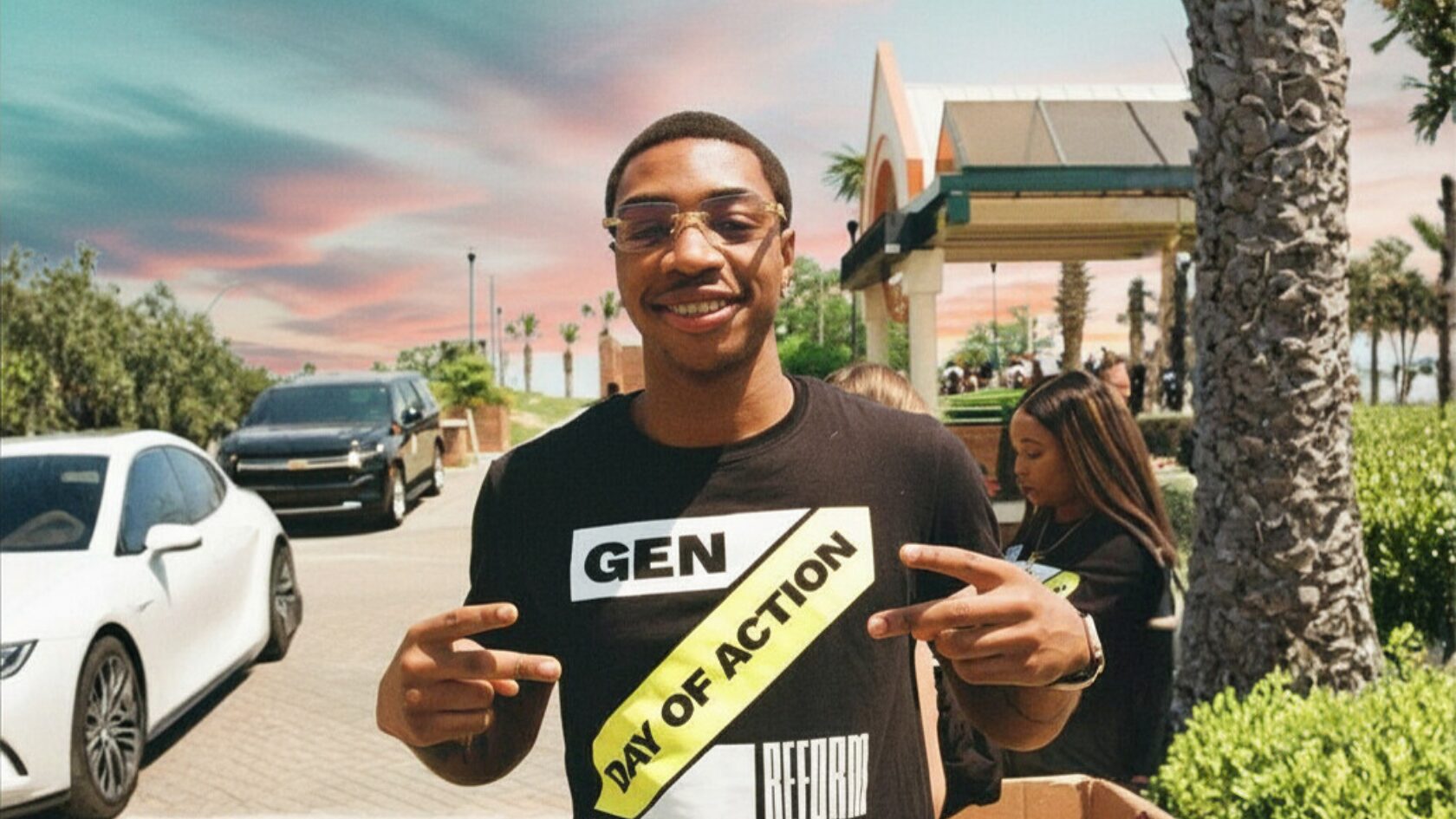
Rondo Bonilla: Gen Z Leader Fighting to Change Probation & Parole
By: Billy Glidden, Senior Communications Manager

Welcome to REFORM in Focus, our thought leadership series that spotlights innovators reimagining probation, parole, and public safety. Each edition features experts who are driving meaningful change to our supervision system.


Just a few years ago, Rondo Bonilla was incarcerated at Rikers Island. Today, he is REFORM’s Gen Z Organizer, raising awareness and galvanizing his generation to fight for change. We caught up with him about his life, his work, and REFORM’s forthcoming Gen Z Day of Action.
Rondo, you’ve been with REFORM for two years now, and you’ve done a lot to get your generation interested in criminal justice reform. How did this all happen?
It was a journey. I was 18 when I first got locked up. I was at Rikers, and because of the environment in there, my mentality became “eat or get eaten.” My first week there, I got jumped for my food by grown men. I had to adapt. It was very clear to me that the guys I was in Rikers with grew up like me. They’d seen violence and abuse, and they’d become angry as a result. I was angry. But that’s our system, in a lot of ways: people that are already traumatized before they get to prison end up even more traumatized while inside – and they come home worse off.
I was headed down this road, but then I got a blessing. I was moved to a less violent section of the jail and joined a program called ThreeSixty founded by LaLa Anthony. ThreeSixty prepares men like me to reenter society with a fresh start. I had mentorship, opportunities to tell my story, and maybe most importantly, a vision for what my life could look like after jail – it was a great feeling. That’s also how I met Jessica Jackson, now REFORM’s CEO. She visited and asked me:
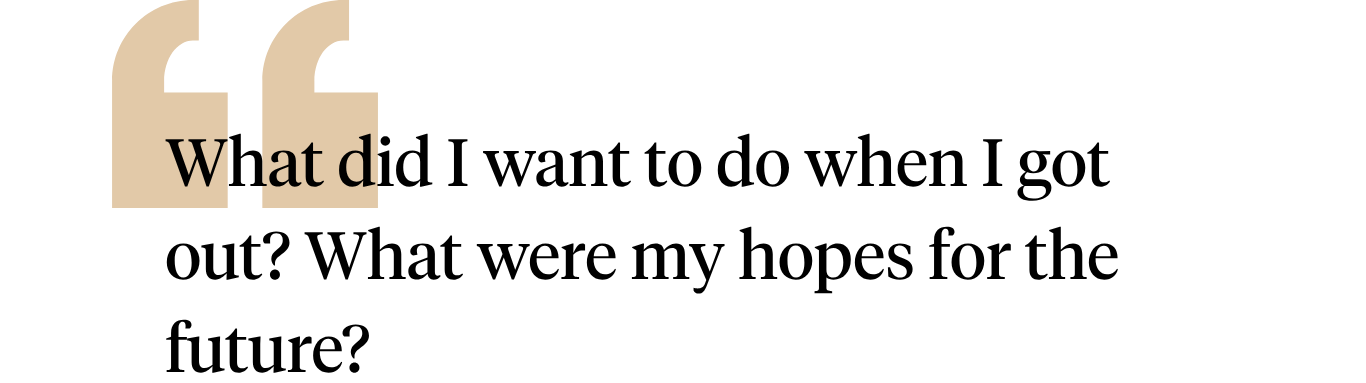
I wasn’t sure, but I knew I wanted to make a difference. When I got out, I got hired at REFORM, and the rest is history. I’ve met young people all around the country – many of whom also have deep personal connections to our criminal justice system and are working to make things better.
How did your Gen Z work get off the ground?
It started off with a Gen Z dinner at Michael Rubin’s home, co-hosted by Kim Kardashian, back in January 2023. We got together with some of the most influential Gen Zers in the country, people like Charli and Dixie D’Amelio, CJ Stroud, Bryce Young, Phoebe Gates, Sophia Kianni, and other members of what would become our Future Shapers Advisory Board. I got to share my story. From there we formed the Future Shapers Advisory Council and went on to host three Gen Z Days of Action, activating students on campuses across the country.
Why is Gen Z especially important for this work?
I believe – no, I know – that Gen Z has the power of accountability. We have more access and tools to communicate than any generation before us. I’ve seen how we hold people accountable when they’re out of line, when something wrong is being done. We create trends. We’ve got command. We use social media to gain traction and get attention.
Plus, we know that this issue unites my generation. REFORM actually did some polling that found 90% of Gen Z voters think public safety is an important issue. They also see probation and parole reform as key to making us safer and want to see candidates take more leadership on this issue. Gen Zers understand that the current system isn’t helping anybody. It’s not keeping us safe and it’s not helping people get rehabilitated.
You mentioned public safety. What does public safety mean to you?
To me, it’s about all people – any age, any race, any background – can come outside their house and walk the streets and feel safe. People sometimes act like public safety only matters to certain people, people who look or live a certain way. It matters to everybody. People want to be able to take a train, take a bus, walk to the store, come outside their living area, be on their neighborhood block.
One thing I learned in Rikers and from so many of the people I’ve met on probation and parole is that the current system doesn’t really make us safer. It’s holding people back, furthering trauma, and locking people out of the workforce.
And at REFORM we also help people who really don’t feel safe—people on supervision. We fight for policies so these people don’t have to feel the stigma of invisible chains. Say you did 15 years inside and you’ve got 10 years of probation. You don’t feel secure, because you’re walking through your community worrying about being late to a meeting, getting a technical violation, having to pay restitution – and one slip up could send you right back to prison.
We’ve got to think differently about public safety as a concept. Think about how we’re spending time, energy, and resources on incarceration and punitive approaches to supervision instead of rehabilitation. Most people in the system will go home someday, and many will go home on supervision. But go home to what?
Tell us about the Gen Z Day of Action.
The Gen Z Day of Action is an annual activation at college campuses across the country. Our goal is to get folks on campus educated about the important issue of supervision reform. A lot of folks don’t realize that the number of people on probation and parole is about two times the number of people in the prison system. We know young people want to change the justice system, but we need to help them make the connection to the supervision system. That’s why we host tabling events or classroom takeovers in criminal justice-related classes to spread awareness about the policy efforts of REFORM Alliance and putting the Gen Z perspective at the forefront.
REFORM has passed 22 bills in 12 states, so we know that change is possible and how to achieve it. We’re excited to bring the next generation of leaders into the fold.
Tell us about this year’s event.
This year’s Gen Z Day of Action is all about building support for our federal bill, the Safer Supervision Act. We’re bringing young people from across the country together for a live event to break down what’s happening in the federal supervision system, hear from leaders and directly impacted voices, and take action together.
We’ve made real progress at the state level, but the federal system impacts all 50 states, so getting college students and young people aware of these injustices is critical. Changing laws in Congress can be slow, no matter who’s in office, but everyone has a representative on Capitol Hill. That means no matter your zip code or where you go to school, you have a role to play.
This event is about helping people understand that and giving them clear, practical ways to get involved and push for change.
Tell us a bit about our campus ambassadors.
Our campus ambassadors are students and professors with a passion for criminal justice. It’s very important that while taking criminal justice-related classes in college you get involved in some sort of policy work to get a good sense of how the process works. Most people have never participated in a lobby day or campaign, so this creates an opportunity for Gen Z folks and professors to be a part of federal legislation that has a good chance of being passed.
Many of them come to this issue from their own personal experience. Last year, one of our ambassadors Kaylin Guzman wrote about her journey from being on probation to now being in law school. Young people like Kaylin are the most powerful messengers for bringing more young people into the movement.
What inspires you about the young people you’ve met?
The leadership. The way they’re taking responsibility. They’re so passionate. So many students came up to me this week, wondering about how to find their voice and their lane.
And when they see our ambassadors, it’s like, these are their fellow students. So naturally they want to know more. Being able to tie our organization to their school—to link these things in their mind—is a beautiful thing.
It sounds like the Gen Z work will only grow from here. What can we look forward to?
That’s absolutely right. So as the momentum grows for Gen Z and policy, we are looking to do prison visits, reentry simulations, and listening sessions in communities affected by violence. We can also expect a Gen Z REFORM Advocacy Institute cohort pending and a lot of collaborations with youth-related organizations or Gen Z entrepreneurs who are in similar spaces.
You’re a busy man, Rondo. What keeps you motivated?
Honestly, coming to work and seeing my coworkers. People have different walks of life and experiences that they offer, but they’re showing up and being that voice. I’m from the Bronx. I grew up a certain way. People saw me the way I was, and they see me now. It gives people hope. I see how it’s motivating to my peers—people who have been through similar things and now want to get their life together.