Jesse Crosson on Life After Prison, Second Chances, and the Future of Supervision Reform
Jesse Crosson spent 19 years in prison before receiving a conditional pardon and returning home under supervision. Now an author, advocate, and TikTok creator, he talks to REFORM about reentry, the Second Chancer Foundation, and what real supervision reform looks like.
By Daisy Polowetzky, Marketing Intern

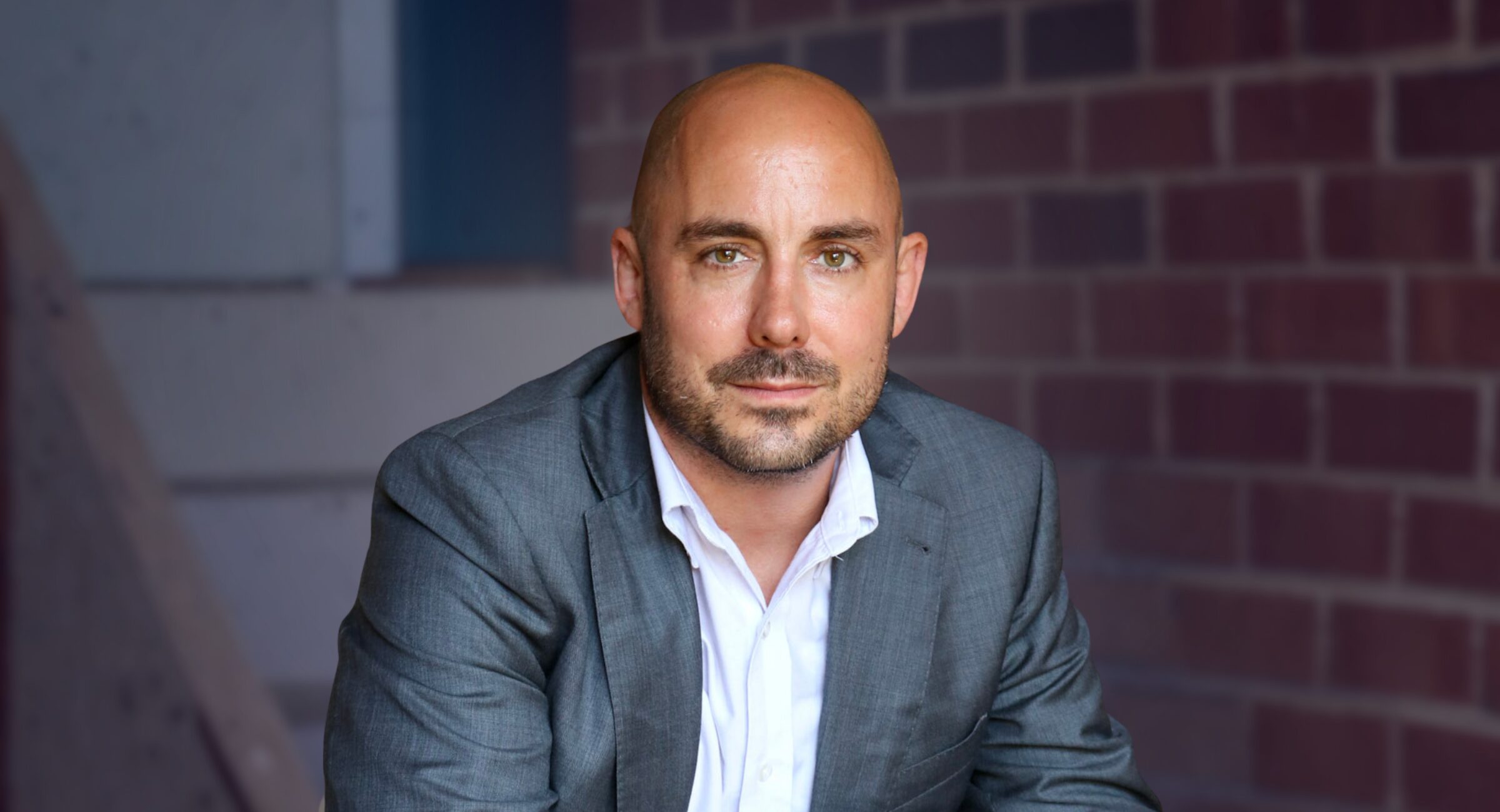
Jesse Crosson was 18 years old when a judge sentenced him to 32 years in prison, double what the sentencing guidelines recommended. He had no prior record. After 19 years, Governor Ralph Northam of Virginia granted him a conditional pardon. His release marked the beginning of a new chapter, but Jesse still faced three years of probation before eventually earning his full freedom in 2024. Since coming home, Jesse has founded the Second Chancer Foundation, built a community of hundreds of thousands on TikTok, and published his memoir, The Best Part of Prison: The Power of Second Chances and Reclaiming Life Out of Darkness. He will join REFORM’s New York City office on August 19 for our Speaker Series.
Before the event, we spoke with Crosson about life after incarceration, his time on supervision, building a career, and his hopes for supervision reform.
You speak a lot about how you were given a second chance when you received a conditional pardon. What do you remember most about the first days and weeks as you transitioned from prison to probation? Were you prepared for coming home? What caught you completely off guard?
I remember the feeling of being overwhelmed. That was the constant. There were a lot of amazing things: sights, sounds, smells, people, and food. But fundamentally, I was overwhelmed.
I hadn’t gone through a reentry program because I received a pardon; my release date wasn’t for another 10 years. I had done a lot of work to prepare myself and was still fundamentally unprepared. I did not comprehend the reality or the challenges, despite how much work I had done to prepare and understand the landscape.
People often talk about reentry in terms of finding a job or a place to live, which are obviously critical. What else do people need to build a stable life after incarceration? What do the public and policymakers often overlook?
I think about stability through a biopsychosocial lens: mental health stability, physical safety and medical stability, and social stability, which means having a community. There’s really nothing done to prepare people for any of those.
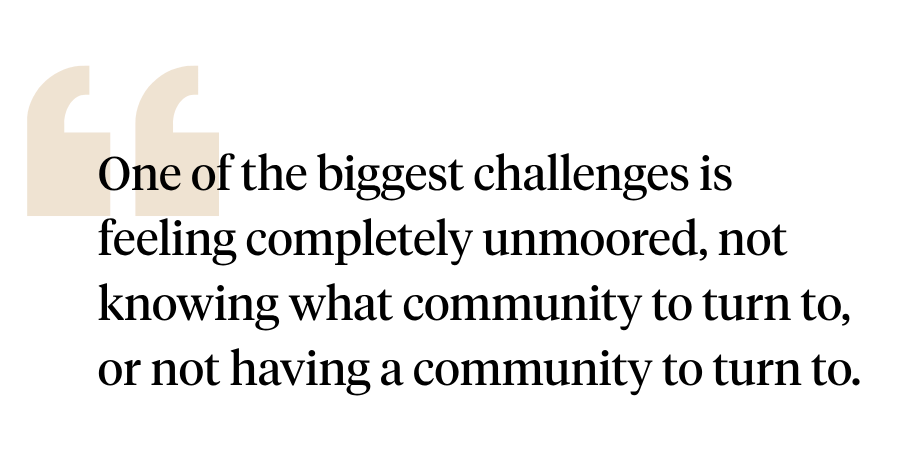 Many people don’t have the tools or resources for mental health, stability, or even the cohesion needed to make the world make sense.
People also often lack medical care. We’ve done better in Virginia, and a lot of states have done better, by expanding Medicaid. It’s not universal, and there are still all kinds of issues with it. But we have people leaving long-term incarceration with 30 days, or sometimes 15 days, of lifesaving medication and no access to the medical care they need to renew their prescriptions.
Was there anyone who made a difference in your reentry process through mentorship or connection? What advice would you have for someone who may not have that when coming out of prison?
I was speaking in a prison last week, and this was one of the exact questions I was asked. I was really lucky. At the time, I had a romantic partner who remains one of my best friends in the world. I actually got to see her last weekend. She has been a rock in my life, and I like to believe I have been in hers as well.
I also had a really broad network. I tell people that I wrote one letter a week while I was inside to 12-step programs, faith programs, chambers of commerce, and anybody and everybody I possibly could. I made as many connections as I could because I realized I would need a network when I got out.
I tell people to have as broad a network as possible. Don’t just have people in the prison or reentry space. Have people in every area of your life, everything you’re interested in, and everything you can imagine yourself working in. If you can afford that stamp each week, it will change your life. It will pay dividends far beyond what you can imagine. Having that person or social group is fundamentally vital, and a lot of people don’t have that.
I wanted to learn more about your foundation. You founded the Second Chancer Foundation to help create the support and connection you were describing for people who are justice-impacted. How has this work affected you over the years?
It’s taken a lot of forms and iterations. I would say the most meaningful work is what we do now in the juvenile detention center, working with kids and their families and preparing them for release. It feels real and immediate.
We tried a national mentoring program and a couple of different curricula, but they felt removed from the experience. Going in and speaking to the kids in a group or one-on-one, holding a family day, seeing the kids with their families, friends, and wider community, and connecting them to resources is gratifying and meaningful in a way I couldn’t have imagined.
We brought therapy horses in last time. I came around the corner with the horses, and people were like, “What the…? We’re in prison. Where did horses come from?”
I think it’s the immediate human part of the work. Our mentorship program and other initiatives may have been more impactful numerically, but they didn’t feel that way. The bigger picture is vitally important, but I feel most connected to the work when I’m working with people one-on-one or in a small group, where I can see the exchange or the light switch of possibility turn on in someone’s eyes.
What does the Second Chancer Foundation do, and what does it hope to do?
I’ve scaled things back this year because we didn’t meet our fundraising targets last year. Our focus now is in the juvenile detention center, giving kids a pathway. More specifically, it’s about storytelling that allows them to take advantage of that pathway.
When we started working there, we brought in academic, trade, and work opportunities. Time and again, the kids would tell me, or convey through their body language and responses, “That’s great, but that’s not for someone like me,” or, “I’d love to go to college, but they don’t take people like me.”
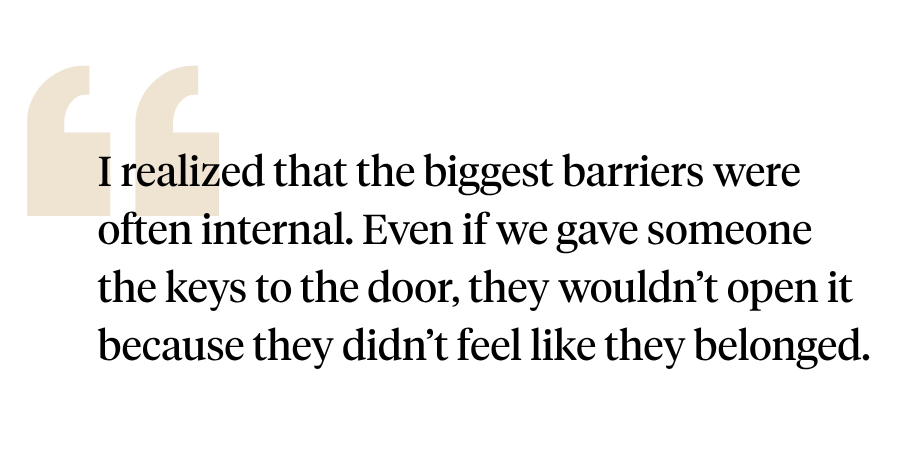 A lot of the work has involved bringing in speakers who help kids see someone from their neighborhood, who looks like them, or who shares their experience and is now working in that field. They see that light switch of opportunity and begin to believe it’s possible.
We also hold larger events where we connect the kids and their families with community partners and resources. We try to ensure that everyone in the household is supported and that there are pathways to advancement for the families, the kids, and everyone involved, because we want to see success stories coming out.
How did you realize that you deserved a second chance? Was that something that took a long time to grapple with? How did you find it within yourself to believe you deserved that second chance at life?
Inside, I found that most people tended to be at one extreme or the other. They either hated themselves, like I did, and didn’t think they were worthy of anything, or they were so boastful and arrogant that they thought they had long ago earned everything they could ever receive.
It took a lot of work and change. I had a lot of people pushing me. I remember one friend sitting me down during a visit and saying, “I feel like my job is to help you see that you’re worthy of a second chance.” That moment stands out.
Ultimately, it was the work I did on and with myself, as well as with others, the mentoring, tutoring, helping, and guiding, that allowed me to wake up one day and feel fundamentally that I was not that person anymore. I could sense that I was no longer the person who could or would cause the harm I had done. Once I believed that at my core, not because someone told me, but because it truly hit me, I started to believe it was possible that I was worthy of something more.
You talked about some of the internal barriers people can carry after incarceration. But there are also very real external barriers that come with a criminal record. You’ve described wondering how employers and other people would treat you if they knew your history. How did that experience influence your decision to share your story so publicly on social media, specifically TikTok?
There are two parts to the first answer. I was institutionalized, so I did what people told me. I didn’t know how to make decisions for myself. A friend of a friend who was a marketing manager said, “Hey, I think you should do this.” So I did. I had no idea what the context, impact, or result would be. She was right: it took off and found an audience.
The second part was that when I got out, every room I walked into and every job I applied for, I feared that people were being nice to me or treating me a certain way, but wondered how they would treat me if they knew. One thing I had learned in prison was that I could run from problems and try to minimize or hide them, or I could face them head-on.
Telling my story and being very public about it put me in a position where I could lead with it, and it could become an asset rather than a liability. In whatever field I wanted to work in, I could be a subject-matter expert rather than someone with a liability in his past. People could take me or leave me. That gave me a greater sense of peace when walking into rooms and exploring opportunities, relationships, or professional arrangements, because I didn’t feel like there was this question behind everything.
How did you feel as it came together, as your follower count grew from a couple hundred to a couple hundred thousand, and as other creators began building communities around this issue? What does that mean for you and for the work globally going forward?
I feel like the internet is the best and worst thing ever to happen to us. It has caused so much anxiety, FOMO, comparison, and theft of joy. But it has also bridged barriers. I have a video call every week with a friend in Ireland whom I never would have met because we never lived in the same country at the same time.
I have connections with people all over the world: people who have been in prison, people who were in military prison, prosecutors, and U.S. attorneys. It has bridged the gap and allowed me to build a community around people who share my values, regardless of our backgrounds or how those values are expressed.
In terms of reentry and the biopsychosocial framework I mentioned, it has allowed me to create a social network I didn’t know was possible. When I was writing letters from the inside, I dreamed of it or had a vague blueprint, but I didn’t realize it could come to fruition.
It has allowed me to feel less alone, to have a greater sense of hope in the work of change, and to accomplish things I wouldn’t have expected. It has helped me find a path forward where it doesn’t feel like I’m on a solo journey, but that many of us are walking the same path.
Do you feel like you found yourself inside, or found yourself again when you started sharing more publicly?
That’s multifaceted. I very much thought I had found myself inside. Then I got out and felt completely lost.
Strangely, in sharing outside, I think I was operating out of survivor’s guilt for a long time. I got a pardon and walked out of prison 10 years before the end of my sentence. I remember every person I walked past, and I remember feeling guilty and ashamed: “Why do I get this and they don’t?”
Not everyone had done the work, and not everyone was equally deserving, but a lot of people were. When I got back, I didn’t feel happy. I felt numb, overwhelmed, and ashamed. A lot of the driving force for me during the first couple of years was survivor’s guilt, because I felt I had to create opportunities for other people.
I did good things, but I didn’t necessarily do them from a healthy place. It’s only been in the last six months or year that I feel I’ve returned to a healthier balance of who I am, what I want, and the things I’m exploring. I had a conversation yesterday with someone at a graduate program. I’m exploring opportunities where I can actually find myself and exist in a space that considers my wants and needs, as well as the things I want to do with other people, rather than always putting other people’s needs or well-being ahead of my own.
You published your memoir earlier this year, “The Best Part of Prison.” Is there a key takeaway you hope readers take from your book and your story?
We are a lot more alike than different. I’ve met people from professional sports, people leaving the military, people making career changes, and people leaving abusive relationships who have never been incarcerated or felt handcuffs, but who relate to the story and see themselves in it.
 Every time I go into a jail or prison, I look as many people in the eye as I can and tell them: “You matter. You have a future. It starts today, and it starts with what you choose to do.” I remember the moment somebody told me that about 10 years ago and the impact it had, because I don’t think I believed it. Despite all the work I had done and all the good I had managed to accomplish, I don’t think I believed it.
I want people to know that regardless of what they’ve done or where they’ve been, it doesn’t have to be over. I want them to know that in their core, not just in their mind.
You’ve talked about your transition from prison onto probation and the challenges of intensive supervision. On July 1, a bipartisan probation reform law took effect in Virginia that creates a pathway for people who are succeeding on probation to be recommended for early termination. What does a policy like that mean to someone trying to move forward with their life?
Policies like this are incredibly important. Sitting in prison, even when I was successful by prison standards, I thought, “Okay, I’m good at being in prison, but I don’t know how I’m going to function in the world or compare with other people out there.”
After getting out, it was really a quest to level up. Maybe I would get off extreme supervision, then get on Shadowtrack, and eventually get off probation. It was a movement toward feeling like a whole person and a full member of society, including getting my civil rights restored so I could vote or hold office.
Those things are really important to me, and I think they’re important to everybody, whether they’re conscious of it or not. A lot of people dismiss it or say it’s not a big deal. But when you live in a system where you feel stigmatized or like a second-class citizen, it’s difficult to engage with that system or feel ownership of your place in it.
The psychological benefit for the individual, as well as the broader societal benefit, makes policies like that really important as we move forward.
My next question builds on that. When you think about the next generation of people returning home, what change would give you the most hope that they will encounter a system different from the one you experienced?
People need not just to believe, but to be shown, that they have value, a place, and opportunities. That opportunity isn’t charity. It’s not, “We’re going to give these people something.” It’s, “We’re giving them the opportunity to work, earn, and build the same as anybody else.” That’s all anybody is looking for.
I’ve never met someone getting out of prison who thought they deserved special charity. I’ve found people who just want a fair shot. Giving people that fair shot benefits everyone. I’m continually surprised by the number of people I’ve met who come out of prison with a greater level of education, drive, and purpose than people in the outside world. Those people tend to be among the most impactful in the communities they return to. When they have that opportunity, they hit the ground running and make an impact not only for themselves, but for everybody in the community.
As you know, REFORM is dedicated to changing the parole and probation system in the United States. Based on your own experience, what would a system of supervision built around giving people second chances look like to you?
It looks like support rather than legalistic enforcement. Probation and parole officers have the opportunity to guide people, support them, connect them with resources, and make sure they win. Or they can act like a referee who just throws a flag and kicks somebody out of the game.
The more we lean in the first direction, the more successful and happier people will be. Can you imagine if your job were to send people back to prison all the time? Unless you’re Cruella de Vil, you’re going to hate your life. It’s not fulfilling.
But when you have a system that is set up to help, and agents of that system support people in reentry and success, everybody wins. It’s a simple equation.
Lastly, we’re excited to welcome you to REFORM for our speaker series. What are you looking forward to most about visiting REFORM and being part of the series?
At every REFORM event I’ve attended, from New York to Chicago, I’ve met some of the most interesting people and had some of the best conversations, whether with leadership, interns, or celebrities. It’s been phenomenal.
Everybody has their own story and their own reason for being there. I think a big part of the success and energy comes from everyone’s “why” coming together in the room and having an opportunity to explore it.
####
Jesse Crosson will join REFORM Alliance for our next Speaker Series on Wednesday, August 19, from 12:00 – 1:00 p.m. ET, for a conversation about reentry, second chances, and how we can build a supervision system that helps people succeed.
The event will be held at REFORM’s New York City office and streamed virtually via Zoom.